
MedusaJS vs Shopify: Which Platform Fits Your Business?
An Honest Comparison for Smart Decisions
You're evaluating eCommerce platforms because your business deserves the right foundation. Maybe Shopify's transaction fees are eating into margins, or you've hit customization walls. Perhaps you're launching something complex and want to avoid costly pivots later. The MedusaJS vs Shopify decision isn't about which platform is better—it's about which one matches your specific needs, timeline, and growth trajectory. DBot Software, an official MedusaJS Expert Partner with offices in Frankfurt and Bangkok, has migrated dozens of businesses between platforms. We've seen what works, what doesn't, and what the real costs look like at scale.
Get Platform Assessment
/The Challenge/
The Real Cost of the Wrong Platform
Choosing an eCommerce platform based on surface-level features leads to expensive problems down the road. Shopify merchants often discover limitations when they need custom B2B pricing workflows, complex inventory logic, or integration with legacy ERP systems—resulting in $50K+ workarounds or forced migrations. On the flip side, teams choosing MedusaJS without adequate development resources end up with half-built stores and missed launch dates. We've watched companies burn six months trying to customize Shopify's checkout, and startups struggle with MedusaJS complexity when a simple Shopify store would have generated revenue faster. The wrong choice doesn't just cost money—it costs momentum, market position, and team morale. One client came to us after spending $120K trying to force Shopify to handle their multi-vendor marketplace with custom commission structures. Another struggled for eight months building a MedusaJS store when they simply needed to sell 50 products quickly.
Client retention
On time delivery
Industries Trusting Our Solutions
NDA Included
Strict adherence to confidentiality
IP Rights Secured
All Intellectual Property belongs to you
/Our Approach/
Your Platform Choice Shapes Your Next 5 Years
Pick the wrong platform now, and you're looking at forced migrations when you hit 10,000 orders monthly, developers quitting over customization constraints, or watching competitors outmaneuver you because your platform can't support new business models. But choose correctly, and your platform becomes an accelerator: Shopify merchants launch in weeks and scale to seven figures without touching code, while MedusaJS users build competitive moats with features Shopify literally cannot replicate. The stakes include transaction fees that could total $200K annually at $10M revenue, developer productivity that's 3x higher or lower depending on platform flexibility, and the difference between owning your customer data architecture versus renting it. One logistics company we worked with—Alpega—needed freight-specific workflows that no SaaS platform supported. MedusaJS gave them 85% matching accuracy and 23% cost reduction. A fashion brand needed to launch fast with minimal dev resources—Shopify got them profitable in 6 weeks.
/Get Started/
Ready to Make an Informed Platform Decision?
Schedule a free platform assessment where we analyze your specific requirements, team capabilities, and growth projections. We'll provide transparent cost comparisons at your revenue levels, identify which features actually matter for your business model, and recommend the platform that fits your reality—whether that's Shopify, MedusaJS, or staying on your current solution. No sales pressure, just honest technical analysis backed by 12+ industries of implementation experience. Get a customized comparison report within 48 hours, including migration timelines if relevant, total cost of ownership projections, and risk assessment. Our team is available 24/7 for consultations across Frankfurt and Bangkok time zones.
/What’s at Stake/
How to Avoid Expensive Platform Mistakes
Platform selection failures typically stem from focusing on features instead of total cost of ownership, underestimating customization needs, or overestimating team capabilities. We eliminate these risks through detailed discovery covering your current tech stack, integration requirements, team composition, and three-year growth projections. Our 100% on-time delivery record extends to platform recommendations—we've never had a client regret following our assessment because we account for hidden costs like Shopify app subscriptions accumulating to $800/month or MedusaJS requiring dedicated DevOps resources. Every recommendation includes fallback options, migration paths if needs change, and realistic timeline expectations. We protect you from platform lock-in by designing architectures that minimize switching costs if your business model evolves.
Compare Platform Costs/Proven Results/
Proven Platform Expertise Across Both Ecosystems

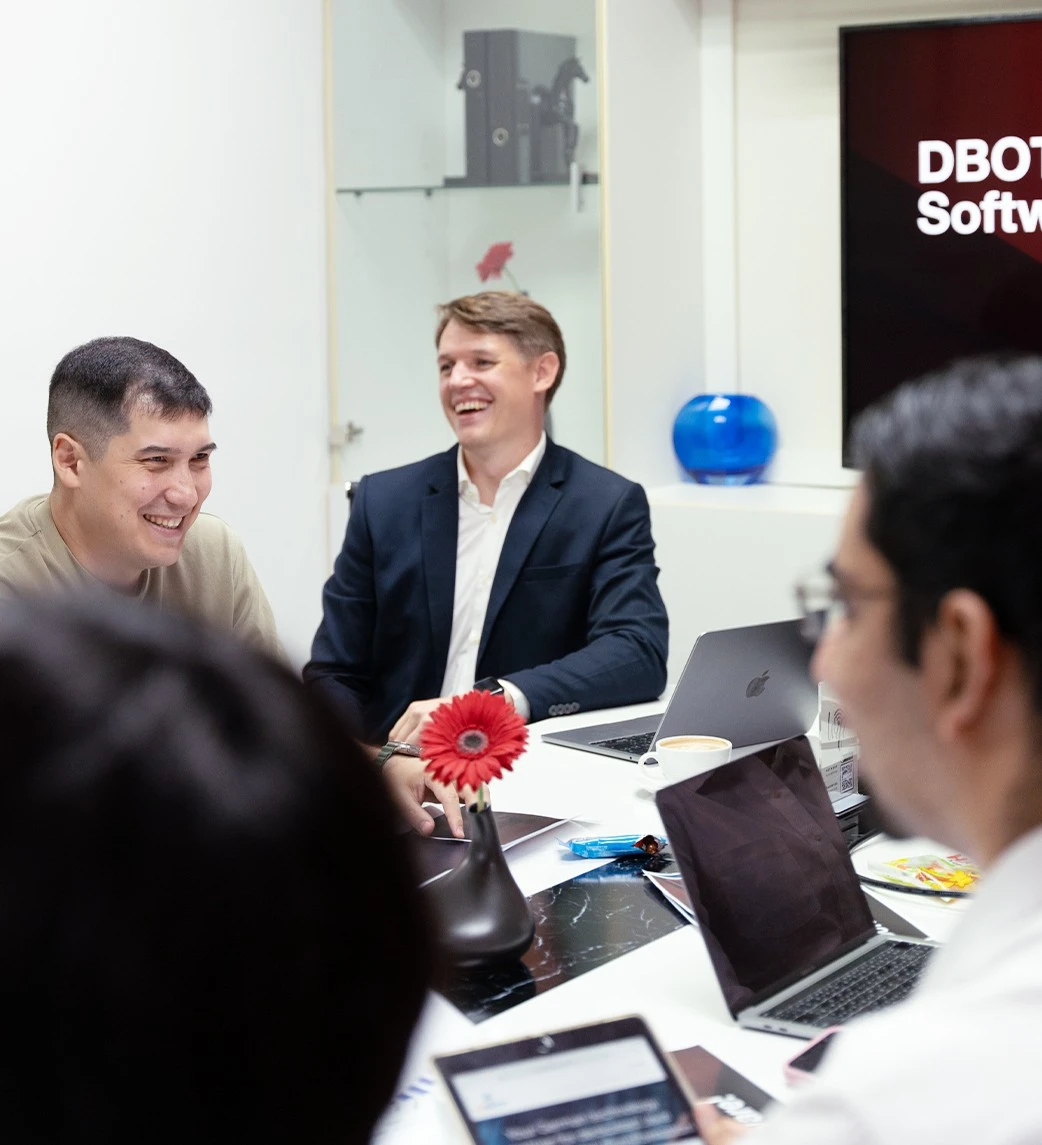
Our 94% client retention rate reflects successful platform decisions that still make sense years later. We maintain long-term partnerships because our recommendations prioritize your success over our project size—sometimes that means smaller Shopify implementations instead of larger MedusaJS builds. Clients return for expansions, new ventures, and referrals because our initial platform assessment was honest. We’ve guided businesses from $100K to $50M revenue, and our advice scales with them. The companies we’ve migrated to MedusaJS haven’t looked back, and the ones we kept on Shopify avoided unnecessary complexity.
Real Platform Decisions, Real Outcomes
DD Bricks needed hybrid B2C and B2B capabilities that Shopify Plus couldn't deliver without expensive workarounds. We migrated them to MedusaJS, achieving 60% workload reduction and $500K annual savings through automation and eliminating transaction fees. Conversely, we've recommended Shopify for clients needing rapid launches with minimal technical resources—getting them profitable in weeks rather than months. Review our case studies to see detailed cost analyses, migration timelines, and post-implementation performance metrics across different business models and revenue levels.

Griffwerk
Griffwerk: Redefining Efficiency and Cost Reduction in the Door Industry
Enhance operational efficiency and reduce costs.
Griffwerk partnered with DBot to integrate intelligent automation and software solutions into their processes. This collaboration focused on streamlining workflows through Robotic Process Automation (RPA) and Python-based automation, ensuring greater accuracy, speed, and cost-effectiveness in daily operations.

Heicko
Heicko e-ast GmbH: Streamlining CRM and ERP Systems with DBot Solutions
To enhance efficiency and automation, Heicko e-ast GmbH partnered with DBot to optimize their CRM and ERP systems.
By streamlining sales processes and automating key operations, DBot helped Heicko reduce manual workload, improve data accuracy, and enhance sales performance. Through intelligent automation, including RPA and API integrations, Heicko’s operations became more agile and scalable.

Häfele
Hafele's Digital Transformation: Intelligent Automation in the Furniture and Hardware Industry
DBot partnered with Häfele to drive a large-scale digital transformation through intelligent automation.
The collaboration spanned various projects, from custom software solutions to automation enhancements. One of the key achievements was the overhaul of Häfele's purchase order system using cutting-edge OCR (Optical Character Recognition) and RPA (Robotic Process Automation) technologies.

RIS Swiss Section Bangkok
RIS Swiss Section Bangkok: 60-Year Legacy in Digital Transformation for Education
60-Year Legacy in Digital Transformation for Education.
RIS Swiss Section Bangkok, a renowned German language school, embarked on a comprehensive digital transformation journey in collaboration with DBot. This marked a significant milestone in the institution's legacy, a commitment to embracing cutting-edge technology and enhancing the educational experience.

DD Bricks
DD Bricks: Revolutionizing E-Comm with a Customized ERP System
Revolutionizing E-Comm with a Customized ERP System.
DD Bricks, the global leader in e-commerce for pre-owned Lego components, embarked on a transformative journey to enhance its operations and solidify its position in the dynamic Lego marketplace. They partnered with DBot to create a tailored ERP system, a game-changing move in the world of Lego commerce.

Alpega
Alpega Group: Enhancing Transport Management Software Excellence
Enhancing Transport Management Software Excellence.
Alpega is a leading global logistics software company that offers end-to-end solutions that cover all transport needs, including transport management services (TMS) and freight exchanges. Dive into the challenges faced, innovative solutions implemented, and the transformative results achieved in the logistics software sector.
Common Questions About Platform Selection
These questions come up in every platform assessment. We've provided direct answers based on implementation experience across both platforms.
Contact usAt what revenue level does MedusaJS become more cost-effective than Shopify?
The breakeven point typically occurs between $3M-5M annual revenue when Shopify’s transaction fees (2.9% + 30¢, or $87K-145K annually) exceed MedusaJS development and hosting costs. However, if you need heavy customization, MedusaJS wins earlier, often at $1M revenue, because Shopify custom development plus app subscriptions surpass building exactly what you need on MedusaJS. We provide exact calculations based on your specific requirements and transaction volume.
Can you migrate from Shopify to MedusaJS without losing sales?
Yes. We execute zero-downtime migrations using parallel environments and phased cutovers. Typical timeline is 6-12 weeks depending on catalog size and customizations. DD Bricks experienced zero revenue interruption during their migration. We migrate customer data, order history, product catalogs, and URLs while maintaining SEO rankings. Most stores see improved performance post-migration due to MedusaJS’s flexibility.
When should I choose Shopify over MedusaJS?
Choose Shopify when you need to launch in under 6 weeks, have limited technical resources, sell relatively standard products without complex workflows, or prioritize simplicity over customization. Shopify excels for teams under 10 people, straightforward B2C retail, and businesses that value ecosystem plug-and-play over custom features. If you’re testing a market, need quick revenue validation, or want minimal technical overhead, Shopify is often the right choice despite higher long-term costs.
What's the real cost difference including development and fees?
Shopify: $2K-80K/year (Basic to Plus subscription) + 2.9% transaction fees + $500-2K/month apps. At $5M revenue that’s ~$225K annually. MedusaJS: $40K-120K initial development + $500-2K/month hosting + ongoing development as needed. Year 1 MedusaJS costs more, but by Year 3 at scale, total cost of ownership is typically 40-60% lower. We provide detailed 5-year projections based on your growth model.
Do you offer a combined approach or hybrid solution?
Yes. Some clients use Shopify for rapid B2C launch while building custom B2B portals on MedusaJS, or start with Shopify and migrate high-complexity features to MedusaJS progressively. We design architectures that minimize switching costs and allow hybrid approaches. This works well for businesses testing markets quickly while maintaining flexibility for custom features as needs emerge.