
Headless Commerce: Complete Guide for 2026
Everything You Need to Know About Headless eCommerce
Your platform can't keep up. Every new channel means another round of custom development. Your mobile experience lags behind competitors. Marketing waits weeks for simple storefront changes. Meanwhile, your monolithic platform's licensing fees keep climbing while flexibility keeps shrinking. You're not alone—most eCommerce leaders face the same constraints with traditional platforms. DBot Software helps ambitious companies break free from platform limitations through headless commerce architecture, combining German engineering precision with practical implementation expertise across 12+ industries.
Book Headless Strategy Session
/The Challenge/
The Platform Limitations Holding You Back
Traditional eCommerce platforms force impossible trade-offs. Want to launch a mobile app? You're rebuilding checkout logic from scratch. Need B2B pricing alongside B2C? You're fighting the platform's assumptions at every turn. Planning an IoT integration or voice commerce? Good luck. Each new touchpoint requires custom workarounds that pile technical debt onto your roadmap. Your developers spend more time battling platform constraints than building features customers actually want. One client came to us after their enterprise platform quoted six months and €200K just to add custom approval workflows for their B2B buyers—functionality that took us three weeks with headless architecture. The business moves faster than monolithic platforms were designed for.
Client retention
On time delivery
Industries Trusting Our Solutions
NDA Included
Strict adherence to confidentiality
IP Rights Secured
All Intellectual Property belongs to you
/Our Approach/
What You're Missing Without Headless Architecture
Every month on a rigid platform costs you opportunities. Competitors with headless setups launch new customer experiences in weeks while you're stuck in quarter-long development cycles. Your conversion rates suffer because you can't A/B test fast enough. Your team burns budget on platform workarounds instead of revenue-generating features. But here's what headless architecture actually enables: launch identical shopping experiences across web, mobile, kiosks, and voice assistants from one backend. Update your storefront daily without touching business logic. Scale your frontend and backend independently during traffic spikes. Integrate any payment processor, ERP, or PIM without vendor permission. Own your data completely. Pay for what you use, not what the vendor decides. Companies like DD Bricks achieved 60% workload reduction and $500K annual savings by moving from monolithic platforms to headless MedusaJS—freeing their team to focus on growth instead of platform maintenance.
/Get Started/
Ready to Explore Headless Commerce?
Start with a free headless strategy session. We'll review your current platform, discuss your growth plans, and assess whether headless architecture makes sense for your business. No sales pressure, no generic pitches—just honest analysis from engineers who've built dozens of headless implementations. If headless fits, we'll outline a tailored migration plan with realistic timelines and transparent pricing. Our team is available 24/7 across Frankfurt and Bangkok offices. Book your session today and discover what headless architecture could mean for your business.
/What’s at Stake/
Avoiding the Pitfalls of Headless Migration
Headless transformations fail when teams underestimate complexity or choose the wrong platform. Some companies go headless because it's trendy, then realize they needed simpler solutions. Others pick platforms that can't scale or require constant vendor support. We prevent these failures through rigorous upfront analysis and phased implementation. Our 100% on-time delivery record comes from realistic scoping, continuous stakeholder communication, and agile development that catches issues early. We maintain parallel environments during migration so your business never stops. We stress-test integrations before go-live. We document everything so you're never dependent on us. You get a strategic partner focused on de-risking your transformation, not just delivering code.
Schedule Free Strategy Session/Proven Results/
Trusted by Companies Across Industries
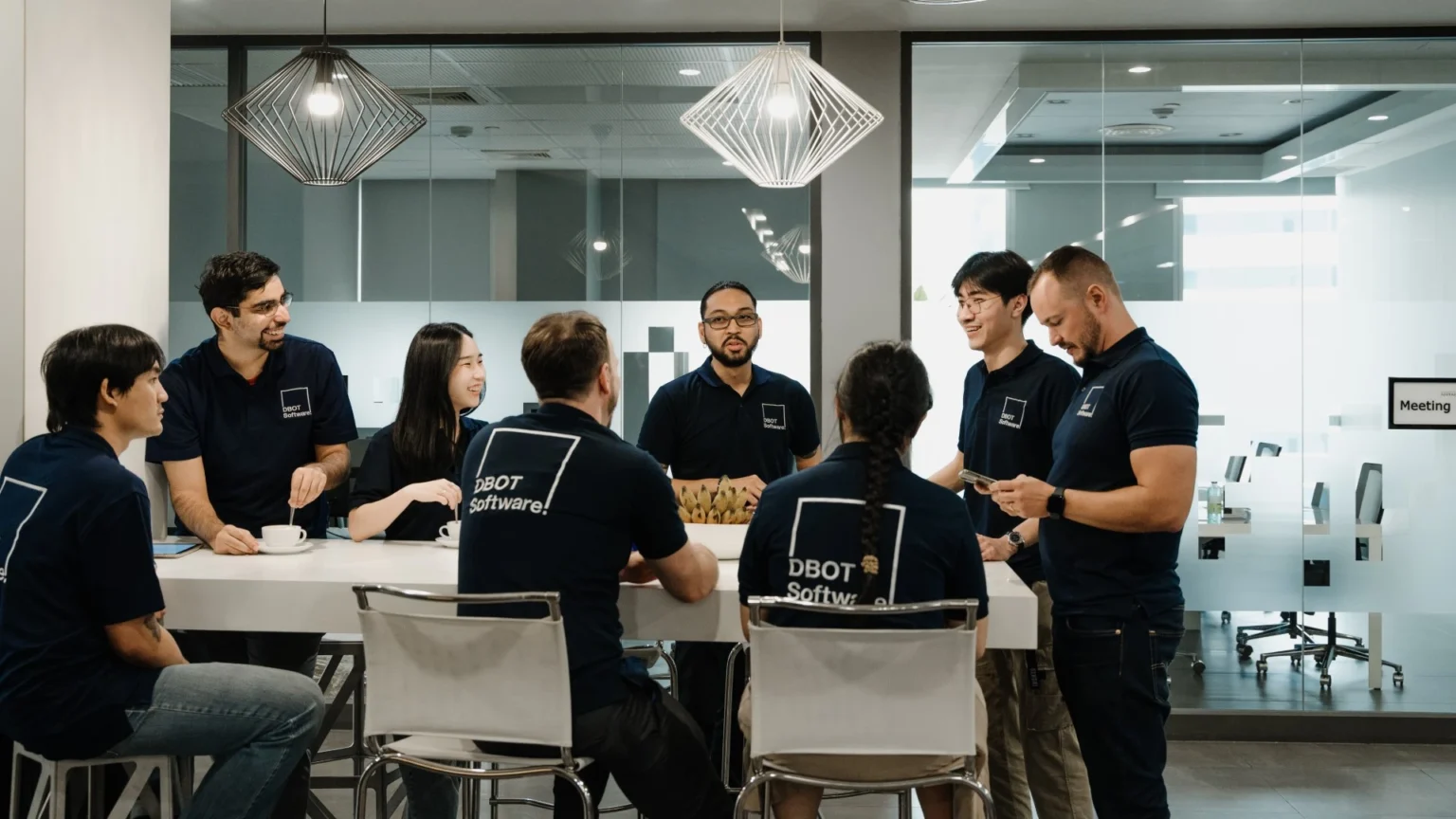
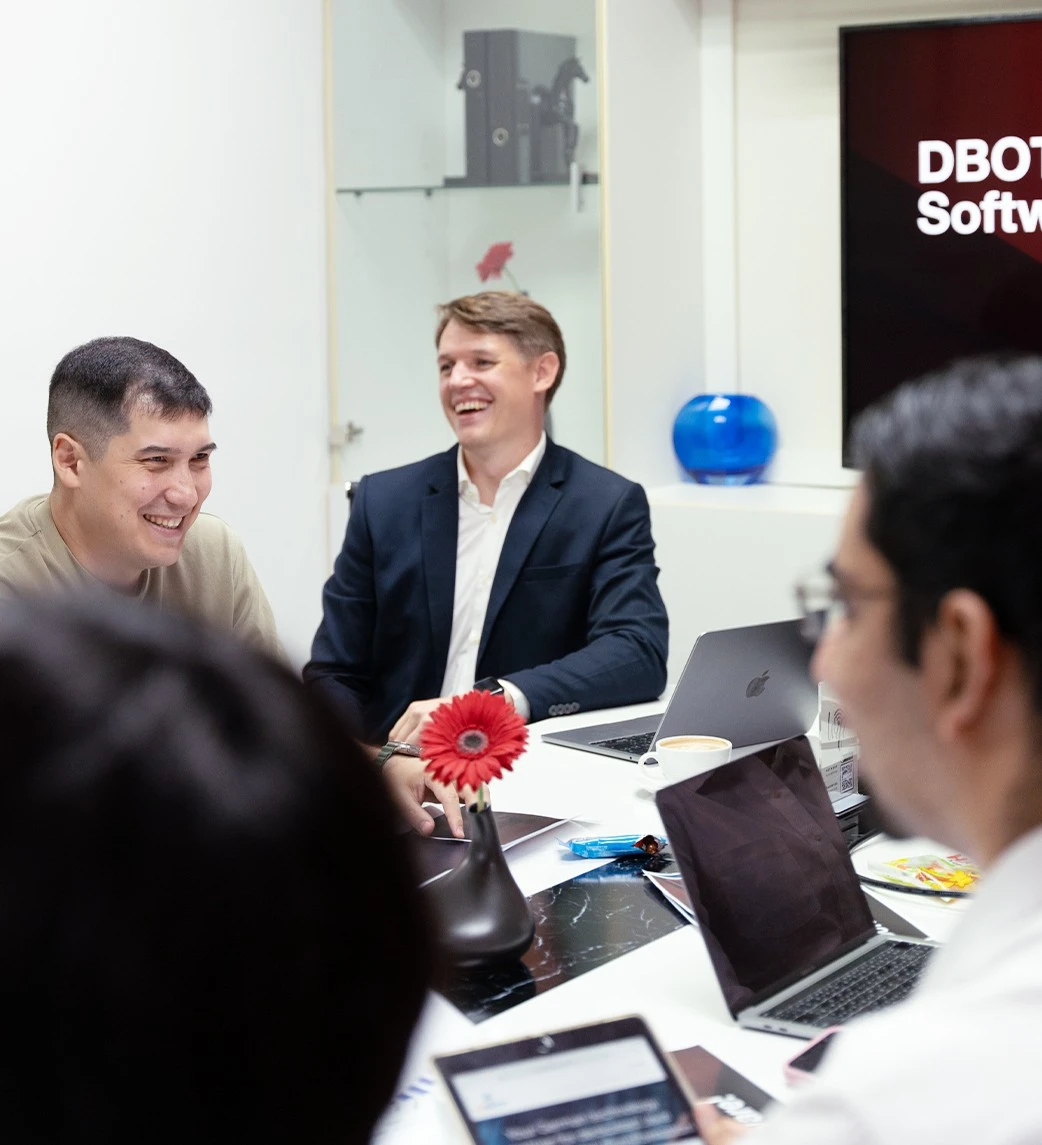
Our 94% client retention rate reflects long-term partnerships built on delivered results. Companies return to DBot Software because we combine technical excellence with business pragmatism. We’ve helped logistics providers, manufacturers, retailers, and service businesses transform their commerce infrastructure—always focusing on outcomes that matter to their specific industry. When clients trust us with their second, third, and fourth projects, it validates our approach: honest communication, quality execution, and genuine commitment to their success. Our headless implementations serve enterprise clients who demand reliability alongside startups who need speed.
Real Results from Headless Implementations
Numbers tell the headless commerce story better than features lists. DD Bricks reduced operational workload 60% and saves $500K annually after migrating to MedusaJS headless architecture—their hybrid B2B/B2C model works seamlessly on one platform. Alpega achieved 85% freight matching accuracy with headless architecture that scaled 3x without performance degradation, reducing costs 23%. Häfele cut administrative workload 60% and decreased stock shortages 30% through headless integration between commerce and supply chain systems. These aren't theoretical benefits—they're measured outcomes from companies that chose headless architecture for concrete business reasons. Review our complete case studies to see specific implementation approaches and results.

Griffwerk
Griffwerk: Redefining Efficiency and Cost Reduction in the Door Industry
Enhance operational efficiency and reduce costs.
Griffwerk partnered with DBot to integrate intelligent automation and software solutions into their processes. This collaboration focused on streamlining workflows through Robotic Process Automation (RPA) and Python-based automation, ensuring greater accuracy, speed, and cost-effectiveness in daily operations.

Heicko
Heicko e-ast GmbH: Streamlining CRM and ERP Systems with DBot Solutions
To enhance efficiency and automation, Heicko e-ast GmbH partnered with DBot to optimize their CRM and ERP systems.
By streamlining sales processes and automating key operations, DBot helped Heicko reduce manual workload, improve data accuracy, and enhance sales performance. Through intelligent automation, including RPA and API integrations, Heicko’s operations became more agile and scalable.

Häfele
Hafele's Digital Transformation: Intelligent Automation in the Furniture and Hardware Industry
DBot partnered with Häfele to drive a large-scale digital transformation through intelligent automation.
The collaboration spanned various projects, from custom software solutions to automation enhancements. One of the key achievements was the overhaul of Häfele's purchase order system using cutting-edge OCR (Optical Character Recognition) and RPA (Robotic Process Automation) technologies.

RIS Swiss Section Bangkok
RIS Swiss Section Bangkok: 60-Year Legacy in Digital Transformation for Education
60-Year Legacy in Digital Transformation for Education.
RIS Swiss Section Bangkok, a renowned German language school, embarked on a comprehensive digital transformation journey in collaboration with DBot. This marked a significant milestone in the institution's legacy, a commitment to embracing cutting-edge technology and enhancing the educational experience.

DD Bricks
DD Bricks: Revolutionizing E-Comm with a Customized ERP System
Revolutionizing E-Comm with a Customized ERP System.
DD Bricks, the global leader in e-commerce for pre-owned Lego components, embarked on a transformative journey to enhance its operations and solidify its position in the dynamic Lego marketplace. They partnered with DBot to create a tailored ERP system, a game-changing move in the world of Lego commerce.

Alpega
Alpega Group: Enhancing Transport Management Software Excellence
Enhancing Transport Management Software Excellence.
Alpega is a leading global logistics software company that offers end-to-end solutions that cover all transport needs, including transport management services (TMS) and freight exchanges. Dive into the challenges faced, innovative solutions implemented, and the transformative results achieved in the logistics software sector.
Common Questions About Headless Commerce
Headless commerce raises important questions about costs, complexity, and implementation. Here are answers to the questions we hear most often from companies evaluating headless architecture.
Contact usWhat exactly is headless commerce and how does it differ from traditional platforms?
Headless commerce separates your storefront (frontend) from your commerce engine (backend) using APIs. Traditional platforms like Shopify or Magento bundle everything together, your backend, frontend, and admin are tightly coupled. With headless, your product catalog, pricing, inventory, and checkout logic live in a backend system (like MedusaJS), while your customer-facing experiences can be anything: web apps, mobile apps, kiosks, voice assistants. This separation gives you complete frontend flexibility while maintaining one source of truth for commerce logic. You can rebuild your storefront without touching business rules, or launch entirely new customer touchpoints using the same backend APIs.
Is headless commerce more expensive than traditional platforms like Shopify or Magento?
Initial implementation costs for headless are typically higher because you’re building custom frontends rather than using pre-made themes. However, total cost of ownership often favors headless, especially with open-source platforms like MedusaJS. You eliminate monthly platform licensing (Shopify Plus, Adobe Commerce), avoid percentage-based transaction fees, and reduce long-term customization costs because your architecture is built for change. One client saves $500K annually on licensing and maintenance after moving from enterprise Magento to headless MedusaJS. For high-volume or complex B2B businesses, headless becomes cost-effective quickly. We provide honest ROI analysis during strategy sessions.
How long does headless migration take and will it disrupt my business?
Timeline depends on your catalog size, integration complexity, and custom requirements. Simple migrations take 8-12 weeks; complex enterprise deployments take 4-6 months. We use parallel implementation; your current platform keeps running while we build and test the new headless system. We migrate in phases, validate data thoroughly, and schedule cutover during low-traffic periods. Our 100% on-time delivery record comes from realistic scoping and proactive communication. You maintain business continuity throughout. We’ve migrated companies processing millions in monthly revenue with zero downtime.
Which headless platform should I choose, MedusaJS, Commercetools, Saleor, or custom?
MedusaJS excels for companies wanting open-source flexibility, complete customization, and no vendor lock-in, ideal for B2B, multi-vendor, or unique business models. Commercetools fits large enterprises needing proven scalability and extensive partner ecosystems but comes with higher costs. Saleor works well for Python-based teams. Custom Node.js backends make sense when you need absolute control. As MedusaJS Expert Partners, we’re platform-agnostic, we recommend what actually fits your requirements, team capabilities, and budget. During strategy sessions, we assess your specific scenario and provide honest platform comparisons.
Do I need a large technical team to maintain a headless commerce system?
Not necessarily. Headless platforms like MedusaJS are built on standard technologies (Node.js, React, PostgreSQL) that most developers know. You can maintain it with smaller teams than legacy enterprise platforms requiring specialized knowledge. We provide comprehensive documentation, train your team, and offer ongoing support agreements if you prefer. Many clients manage their headless systems with 1-2 developers for day-to-day operations. For complex changes, our dedicated development teams augment your capacity without full-time hiring. You’re never locked into expensive vendor professional services.