
B2B eCommerce Platforms Compared: Which Delivers Real ROI?
Find the Platform That Matches Your B2B Reality
Your sales team needs custom pricing approvals. Your buyers demand personalized catalogs. Your ERP integration keeps breaking. You're paying $180K annually for a platform that fights you at every turn. Sound familiar? Most B2B companies inherit platforms built for B2C shoppers—then spend years forcing square pegs into round holes. DBot Software has migrated 40+ B2B enterprises from legacy platforms to modern solutions. We know which platforms actually deliver on B2B promises and which ones leave you rebuilding core features from scratch.
Get Your Platform Assessment
/The Challenge/
Why Most B2B Platforms Fail
B2B commerce isn't retail with bigger order volumes. It's complex approval workflows, customer-specific pricing matrices, quote-to-cash cycles, punch-out integrations, and ERP synchronization. Yet most platforms treat these as expensive add-ons or force you into rigid templates. You're either paying enterprise licenses for features you'll never use, building custom workarounds that break with every update, or maintaining technical debt that slows every new initiative. One manufacturing client spent 14 months customizing Magento for multi-level approvals—only to face a costly migration when Adobe changed licensing. Another paid Shopify Plus fees while rebuilding their entire quoting system externally because the platform couldn't handle negotiated pricing at scale.
Client retention
On time delivery
Industries Trusting Our Solutions
NDA Included
Strict adherence to confidentiality
IP Rights Secured
All Intellectual Property belongs to you
/Our Approach/
Without the Right Platform, You're Building on Quicksand
Choose wrong and you're locked into years of workarounds, integration headaches, and mounting technical debt. Your competitors close deals in days while your quote approval sits in email chains. Your buyers abandon carts because they can't access negotiated pricing. Your IT team spends 60% of their time maintaining integrations instead of building competitive advantages. But get it right? Automated workflows that match your actual business processes. Real-time ERP synchronization that eliminates order errors. Buyer portals that turn $50K manual quotes into self-service transactions. The difference isn't marginal—it's the gap between 15% annual growth and watching market share erode to more agile competitors.
/Get Started/
Ready to Compare Platforms Objectively?
Schedule a free B2B platform assessment. We'll analyze your requirements, evaluate platform options against your actual workflows, and provide an honest recommendation—even if that means optimizing your current system instead of migrating. No sales pitch, just experienced B2B commerce architects helping you make the right call. Get a tailored proposal within 48 hours and tap into our 24/7 support throughout evaluation and implementation. Don't let platform paralysis cost another quarter of growth.
/What’s at Stake/
Platform Migrations Fail When You Lack B2B Expertise
Generic agencies treat B2B like scaled-up B2C. Data migrations lose customer-specific pricing. Integrations break under real transaction volumes. Go-live gets pushed back six months. With 100% on-time delivery and battle-tested B2B migration frameworks, we eliminate these risks. Our agile approach means phased rollouts, not big-bang disasters. We've migrated platforms for complex supply chains, multi-entity distributors, and regulated industries—we know where migrations derail and how to prevent it. Strategic partnership, not just vendor execution.
Book Free Platform Assessment/Proven Results/
Proven Track Record Across B2B Industries

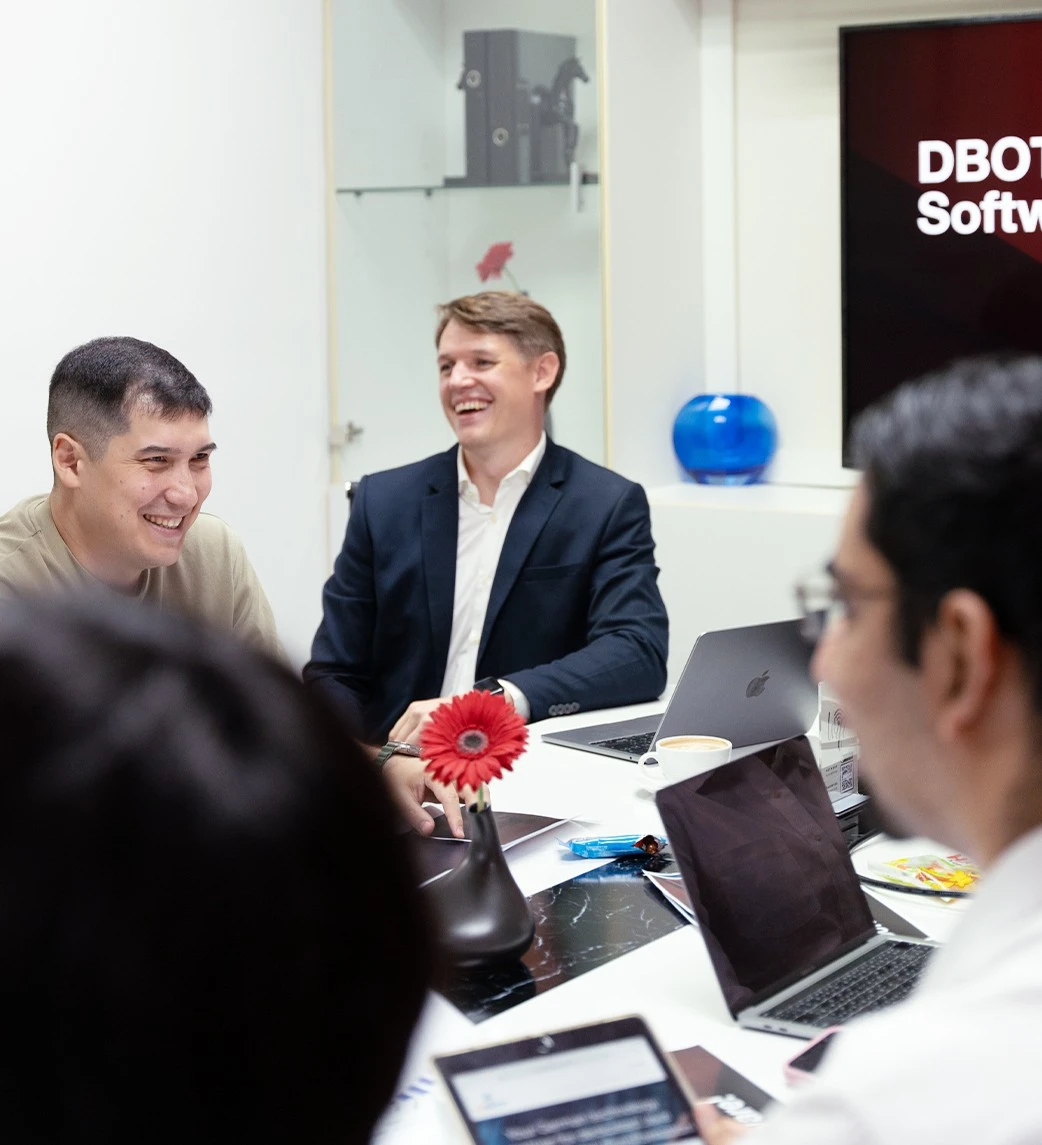
Our 94% client retention rate isn’t luck—it’s what happens when you deliver measurable B2B outcomes. Long-term partnerships with manufacturers, distributors, logistics providers, and wholesalers prove we understand B2B complexity. Clients return for platform enhancements, new integrations, and strategic consulting because we became trusted advisors, not just implementers. When your platform powers revenue operations, you need a partner who gets B2B right the first time.
Real B2B Platforms, Real Transformations
Don't trust vendor case studies written by marketing teams. Review our actual B2B implementations: Häfele's supply chain platform (60% workload reduction, 30% fewer stock shortages), DD Bricks' hybrid B2C/B2B commerce ($500K annual savings), Alpega's logistics marketplace (85% freight matching accuracy, 23% cost reduction). These aren't vanity metrics—they're tangible business outcomes from choosing the right platform and executing migrations flawlessly.

Griffwerk
Griffwerk: Redefining Efficiency and Cost Reduction in the Door Industry
Enhance operational efficiency and reduce costs.
Griffwerk partnered with DBot to integrate intelligent automation and software solutions into their processes. This collaboration focused on streamlining workflows through Robotic Process Automation (RPA) and Python-based automation, ensuring greater accuracy, speed, and cost-effectiveness in daily operations.

Heicko
Heicko e-ast GmbH: Streamlining CRM and ERP Systems with DBot Solutions
To enhance efficiency and automation, Heicko e-ast GmbH partnered with DBot to optimize their CRM and ERP systems.
By streamlining sales processes and automating key operations, DBot helped Heicko reduce manual workload, improve data accuracy, and enhance sales performance. Through intelligent automation, including RPA and API integrations, Heicko’s operations became more agile and scalable.

Häfele
Hafele's Digital Transformation: Intelligent Automation in the Furniture and Hardware Industry
DBot partnered with Häfele to drive a large-scale digital transformation through intelligent automation.
The collaboration spanned various projects, from custom software solutions to automation enhancements. One of the key achievements was the overhaul of Häfele's purchase order system using cutting-edge OCR (Optical Character Recognition) and RPA (Robotic Process Automation) technologies.

RIS Swiss Section Bangkok
RIS Swiss Section Bangkok: 60-Year Legacy in Digital Transformation for Education
60-Year Legacy in Digital Transformation for Education.
RIS Swiss Section Bangkok, a renowned German language school, embarked on a comprehensive digital transformation journey in collaboration with DBot. This marked a significant milestone in the institution's legacy, a commitment to embracing cutting-edge technology and enhancing the educational experience.

DD Bricks
DD Bricks: Revolutionizing E-Comm with a Customized ERP System
Revolutionizing E-Comm with a Customized ERP System.
DD Bricks, the global leader in e-commerce for pre-owned Lego components, embarked on a transformative journey to enhance its operations and solidify its position in the dynamic Lego marketplace. They partnered with DBot to create a tailored ERP system, a game-changing move in the world of Lego commerce.

Alpega
Alpega Group: Enhancing Transport Management Software Excellence
Enhancing Transport Management Software Excellence.
Alpega is a leading global logistics software company that offers end-to-end solutions that cover all transport needs, including transport management services (TMS) and freight exchanges. Dive into the challenges faced, innovative solutions implemented, and the transformative results achieved in the logistics software sector.
Common Questions About B2B Platform Selection
Choosing a B2B eCommerce platform involves technical complexity, cost considerations, and business risk. Here are the questions we hear most from enterprises evaluating platforms.
Contact usWhich B2B platform offers the best customization for complex pricing and workflows?
MedusaJS leads in customization flexibility with open-source architecture and no vendor lock-in. It handles multi-tier pricing, approval workflows, and custom B2B logic without expensive add-ons. Magento offers strong B2B features but requires more development resources. Shopify Plus works for simpler B2B models but has customization limits. We assess your specific workflow complexity to recommend the right fit.
What's the true total cost of ownership for B2B platforms over 3 years?
License fees are just the start. Factor in hosting, integrations, customizations, maintenance, and upgrade costs. Shopify Plus: $2K-40K/month plus apps and custom dev. Magento: $20K-80K annually plus significant hosting and development. MedusaJS: no licensing fees, but requires development investment upfront, typically 40-60% lower TCO than proprietary platforms for complex B2B requirements. We provide detailed 3-year TCO analysis.
How long does a typical B2B platform migration take and what are the risks?
Timelines vary by data complexity and integration scope: 3-6 months for mid-sized distributors, 6-12 months for enterprise manufacturers with heavy ERP integration. Biggest risks are data migration errors, integration failures, and workflow mismatches. Our phased approach with parallel testing eliminates these risks, 100% on-time delivery track record. We migrate incrementally, validate continuously, and go live only when systems prove stable under real transaction loads.
Can I get German engineering quality at competitive prices for B2B platform projects?
Yes, that’s our model. German-managed quality standards with Bangkok development execution delivers 40-60% cost savings versus Western European agencies. You get rigorous German engineering processes, transparent communication, and Thai development efficiency. All projects include IP guarantees, NDAs, and German-standard project management. We serve enterprises that demand quality but need to control costs.
Does MedusaJS work for large-scale B2B with heavy ERP integration requirements?
Absolutely. MedusaJS’s API-first architecture excels at ERP/CRM integrations with SAP, Microsoft Dynamics, NetSuite, and custom systems. We’ve built real-time inventory sync, automated order flows, and complex pricing integrations for manufacturers and distributors. The headless approach means your ERP remains the source of truth while MedusaJS handles commerce logic—cleaner architecture than monolithic platforms trying to replicate ERP functions.