
Your AI-Generated Database Schema Needs an Engineer's Eye
Fix the Hidden Flaws Before They Become Production Problems
AI tools are fast. They'll generate a database schema in seconds, and it will look reasonable, pass basic tests, and get your project moving. Then you hit 10,000 users, a complex B2B workflow, or a high-volume transaction period, and things start to crack. Missing indexes. N+1 query loops that bring APIs to their knees. Relationships that made sense on paper but fall apart under real usage patterns. No migration strategy. No rollback plan. Don't let a schema that looked fine in development become a crisis in production. DBot Software reviews, restructures, and optimizes your database architecture, before your users experience the consequences.
Book Free Database Assessment
/The Challenge/
Where AI-Generated Schemas Break Down
AI code generation tools are not database architects. They produce schemas that pass surface-level validation but ignore the operational realities of live systems. Common problems we see repeatedly: no composite indexes on high-frequency query patterns, absent or incorrect foreign key constraints, inefficient many-to-many relationship modeling, no soft-delete strategy, and zero thought given to migration workflows when the schema inevitably needs to change. If you're running a B2B platform, marketplace, or ERP-integrated commerce system, like many of the clients we work with across logistics, retail, and supply chain, these gaps don't just slow things down. They cause data inconsistencies, failed transactions, and outages at exactly the wrong moments.
Client retention
On time delivery
Industries Trusting Our Solutions
NDA Included
Strict adherence to confidentiality
IP Rights Secured
All Intellectual Property belongs to you
/Our Approach/
The Cost of Getting This Wrong
A poorly structured database doesn't announce itself. It degrades quietly, queries get slower, API timeouts increase, reports take longer to run, and your team starts spending engineering cycles on workarounds instead of features. Left unaddressed, these problems compound. A schema that works for 500 users can collapse at 50,000. A migration done wrong can take a platform offline for hours. The flip side: a well-designed, properly indexed database with clean migration workflows is infrastructure that scales with your business. Query performance is fast. Data integrity holds under load. Your engineers ship features instead of fighting fires. That's what proper database architecture delivers.
/Get Started/
Start With a Free Database Assessment
Send us your schema, share your current stack, and describe the performance issues you're already seeing, or the scale you're planning for. We'll review your architecture, identify the highest-risk gaps, and provide a clear action plan with no obligation. The first conversation is free. The risk of doing nothing is not. Reach out today and let's look at what your AI-generated schema is hiding.
/What’s at Stake/
Worried About Disrupting a Live System?
This is the concern we hear most, and it's valid. Touching a live database schema without the right approach can cause exactly the outage you're trying to prevent. That's why our audit process starts read-only: we analyze before we recommend, and we recommend before we touch anything. Every structural change is designed with zero-downtime migration strategies, tested in staging environments, and executed with rollback paths in place. Our 100% on-time delivery record reflects a methodology that is careful, not cautious to the point of inaction. You stay informed at every step.
Get Your Free Schema Review/Proven Results/
94% Client Retention Doesn't Happen by Accident

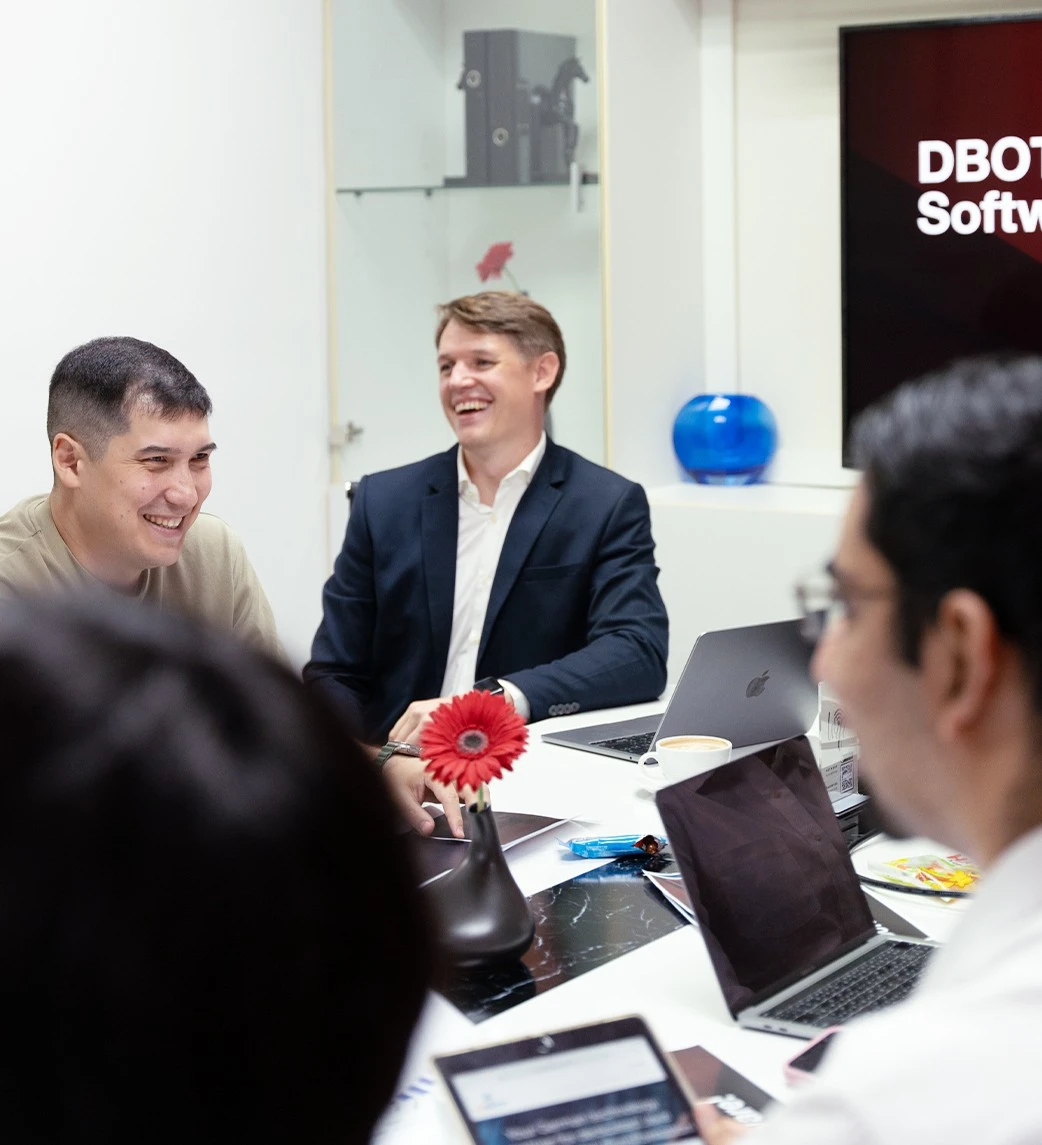
Our clients stay because results are real and delivery is consistent. Alpega returned with a 3x scalability target after seeing 85% freight matching accuracy and a 23% cost reduction from their initial engagement. RIS Swiss School achieved 100% platform integration and a 60% administrative workload reduction. These aren’t edge cases, they’re the standard we hold ourselves to on every project. When you trust us with your infrastructure, you’re working with a team that has delivered at this level across logistics, retail, education, and supply chain.
Real Systems. Real Results.
Our case studies aren't marketing copy. They're documented outcomes from production systems that had real problems and needed real engineering. DD Bricks needed a hybrid B2C and B2B commerce architecture that could handle both consumer and wholesale workflows without compromise, and walked away with $500K in annual savings. Häfele needed supply chain automation that reduced manual workload without breaking existing ERP integrations. The pattern is consistent: proper architecture, disciplined execution, measurable impact. Your database review starts the same way.

Griffwerk
Griffwerk: Redefining Efficiency and Cost Reduction in the Door Industry
Enhance operational efficiency and reduce costs.
Griffwerk partnered with DBot to integrate intelligent automation and software solutions into their processes. This collaboration focused on streamlining workflows through Robotic Process Automation (RPA) and Python-based automation, ensuring greater accuracy, speed, and cost-effectiveness in daily operations.

Heicko
Heicko e-ast GmbH: Streamlining CRM and ERP Systems with DBot Solutions
To enhance efficiency and automation, Heicko e-ast GmbH partnered with DBot to optimize their CRM and ERP systems.
By streamlining sales processes and automating key operations, DBot helped Heicko reduce manual workload, improve data accuracy, and enhance sales performance. Through intelligent automation, including RPA and API integrations, Heicko’s operations became more agile and scalable.

Häfele
Hafele's Digital Transformation: Intelligent Automation in the Furniture and Hardware Industry
DBot partnered with Häfele to drive a large-scale digital transformation through intelligent automation.
The collaboration spanned various projects, from custom software solutions to automation enhancements. One of the key achievements was the overhaul of Häfele's purchase order system using cutting-edge OCR (Optical Character Recognition) and RPA (Robotic Process Automation) technologies.

RIS Swiss Section Bangkok
RIS Swiss Section Bangkok: 60-Year Legacy in Digital Transformation for Education
60-Year Legacy in Digital Transformation for Education.
RIS Swiss Section Bangkok, a renowned German language school, embarked on a comprehensive digital transformation journey in collaboration with DBot. This marked a significant milestone in the institution's legacy, a commitment to embracing cutting-edge technology and enhancing the educational experience.

DD Bricks
DD Bricks: Revolutionizing E-Comm with a Customized ERP System
Revolutionizing E-Comm with a Customized ERP System.
DD Bricks, the global leader in e-commerce for pre-owned Lego components, embarked on a transformative journey to enhance its operations and solidify its position in the dynamic Lego marketplace. They partnered with DBot to create a tailored ERP system, a game-changing move in the world of Lego commerce.

Alpega
Alpega Group: Enhancing Transport Management Software Excellence
Enhancing Transport Management Software Excellence.
Alpega is a leading global logistics software company that offers end-to-end solutions that cover all transport needs, including transport management services (TMS) and freight exchanges. Dive into the challenges faced, innovative solutions implemented, and the transformative results achieved in the logistics software sector.
Common Questions About Database Optimization
If you're evaluating whether a database audit makes sense for your project, here are the questions we hear most often, answered directly.
Contact usHow long does a database audit and optimization take?
For most mid-sized applications, the initial audit takes 3–5 business days. Restructuring and optimization work depends on complexity, but we scope this clearly upfront so there are no surprises. We’ve completed full schema reviews and migration strategy designs in under two weeks for production systems with millions of records.
Can you work on a live production database without downtime?
Yes. Our standard approach uses zero-downtime migration strategies, we design schema changes to run incrementally, with feature flags and rollback paths in place. We test in staging before any production change. Your users should not notice the work happening.
How does the cost compare to fixing problems after launch?
A proactive database audit typically costs a fraction of what emergency optimization costs once performance degrades in production. Beyond direct engineering cost, consider developer time lost to workarounds, user-facing outages, and data integrity issues that require manual correction. Clients like DD Bricks saved $500K annually through properly structured architecture, the audit cost was recovered within weeks.
Do you work with our existing tech stack or do we need to migrate?
We work with your existing stack, PostgreSQL, MySQL, cloud-native databases on AWS, Azure, or Google Cloud. We optimize what you have rather than forcing platform changes. If a migration would deliver significant value, we’ll explain why with specifics, but that’s never the starting assumption.