The SaaS Market Is Splitting—And Your Next Move Determines Everything
You’re paying $10,000+ per year for your e-commerce platform. Maybe more.
Every year, the price increases. Every feature request goes into a “roadmap” black hole. Every workflow you need requires another integration, another license, another monthly fee.
You’re not alone. We’ve watched hundreds of ecommerce brands hit the same breaking point.
The market is calling it “SaaS Winter.” But that’s not what’s happening. This isn’t a freeze—it’s a bifurcation. And understanding which side you’re on will determine whether you scale or struggle over the next 24 months.
The Two Paths: Commodity vs. Mission-Critical
Path 1: The Software Getting Commoditized
These are the “nice-to-haves” that once commanded premium prices:
- Generic analytics dashboards
- Basic CRM add-ons
- “Productivity” tools without measurable ROI
- Features now bundled free by Google, Salesforce, and Shopify
The 30-day test: If this software disappeared tomorrow, would your business grind to a halt within 30 days?
For most SaaS tools, the honest answer is no.
Path 2: The Software That Becomes Infrastructure
These are the platforms where:
- AI is built into the core (not a wrapper feature)
- Workflows are embedded into daily operations
- Value is directly tied to revenue, cost savings, or risk reduction
The 30-day test result: If this disappeared, you’d feel it immediately.
For ecommerce brands, this is your order management, your inventory system, your customer experience engine. This is where you compete.
And this is where the “$10K SaaS Tax” hurts most.
The Breaking Point: When SaaS Becomes a Liability
Over the past 18 months at DBot Software, we’ve noticed a pattern in the brands reaching out to us.
They all hit the same wall:
The Rigidity Wall: “We need this workflow to work this way, but the platform won’t allow it.”
The Integration Hell: “We’re paying for 7 different tools just to make our core platform functional.”
The Cost Spiral: “Our SaaS fees increased 40% in two years, but we’re getting the same features.”
The Roadmap Blackhole: “We’ve been asking for this feature for 18 months. Still ‘under consideration.'”
One ecommerce director told us: “We realized we were renting a house we couldn’t renovate, paying increasing rent, with a landlord who wouldn’t fix anything.”
That’s when smart brands start asking a different question:
“What if we owned this instead?”
The Custom Platform Alternative: Ownership Over Rental
Here’s what we’re seeing work for mid-to-enterprise ecommerce brands in 2025:
Instead of Renting SaaS, Build Your Infrastructure
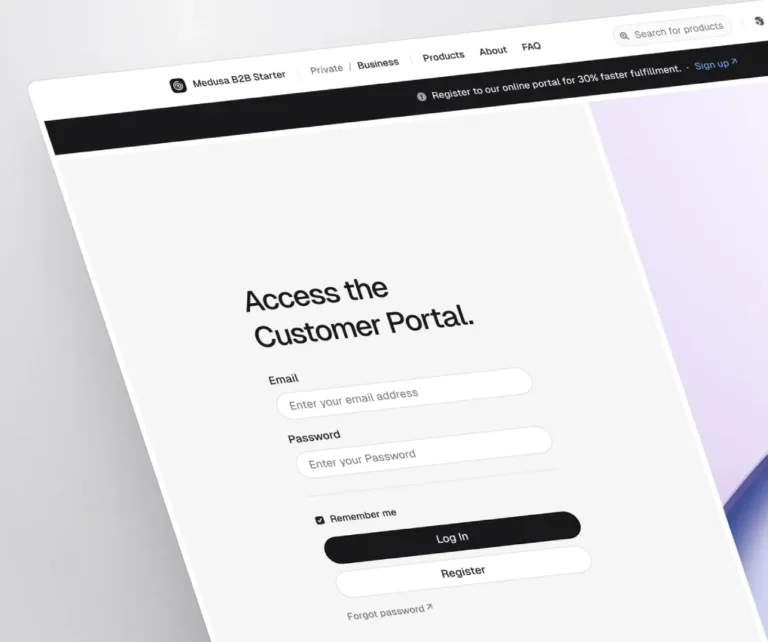
Using modern frameworks like MedusaJS (the open-source Shopify alternative), brands are building custom ecommerce platforms that:
✅ Fit their exact workflows — Not templates. Not “close enough.” Exact.
✅ Eliminate recurring license fees — Build once, own forever. Zero monthly bleeding.
✅ Scale with actual business needs — Add features when YOU need them, not when they hit a vendor’s roadmap.
✅ Integrate seamlessly — Your data, your systems, your control.
The Economics Make Sense
Traditional SaaS Path:
- Year 1: $50K in licenses
- Year 2: $60K (price increase)
- Year 3: $72K (another increase)
- Year 4: $86K
- Year 5: $103K
- 5-Year Total: $371K+ (plus integration costs, plus add-ons)
Custom Platform Path:
- Year 1: $80-120K development (own it outright)
- Years 2-5: Maintenance only ($10-20K/year)
- 5-Year Total: $120-200K
You own the platform. You control the roadmap. You stop the bleeding.
Why Brands Choose DBot Software for Custom Ecommerce Development
We’ve been building custom ecommerce platforms since 2018, with a specific advantage:
German Engineering Standards + Bangkok Development Costs
Our team operates from Bangkok with German management oversight. This isn’t outsourcing—it’s strategic positioning.
You get:
- European-standard code quality and project management
- Southeast Asian development efficiency and cost structure
- Native English communication (no translation layers)
MedusaJS Expertise
We’re not generalists dabbling in the latest framework. MedusaJS is our core expertise.
Why MedusaJS works for custom ecommerce:
- Built for headless commerce from day one
- Modular architecture (use what you need, nothing you don’t)
- Modern tech stack (Node.js, React, PostgreSQL)
- Active open-source community
- Enterprise-ready out of the box
We’ve delivered platforms that handle:
- Multi-currency, multi-region operations
- Complex B2B workflows alongside B2C
- Custom pricing engines and promotion logic
- Deep ERP and warehouse integrations
Timeline: 2-4 Months to Launch
Not 18 months. Not “Phase 1 in Q3, Phase 2 TBD.”
2-4 months from kickoff to launch.
How?
- Pre-built MedusaJS foundation (don’t reinvent the wheel)
- Focus on YOUR differentiating workflows
- Agile sprints with weekly demos
- German efficiency applied to project management
The Real Question: What’s Mission-Critical for Your Business?
Here’s how to know if you’re ready to move from SaaS rental to platform ownership:
You’re Ready If:
- Your platform IS your competitive advantage (not just infrastructure)
- You’re paying $40K+/year in SaaS fees (and it keeps increasing)
- You need workflows SaaS platforms won’t support (and you’re tired of workarounds)
- You’re scaling (and SaaS pricing is scaling faster than your revenue)
- You want control (over your data, features, and roadmap)
You’re Not Ready If:
- You’re pre-revenue or early-stage (SaaS makes sense here)
- Your needs fit perfectly into existing SaaS templates
- You don’t have technical resources for basic maintenance
- You’re looking for the cheapest option (custom isn’t cheap—it’s cost-effective long-term)
The Path Forward: From SaaS Tax to Platform Ownership
If you’re tired of paying the $50K SaaS tax, here’s exactly how we guide brands through the transition:
Step 1: Platform Audit (Free, 60 Minutes)
We review:
- Your current SaaS costs (total cost of ownership)
- Your workflow pain points
- Your technical requirements
- Your business goals for the next 24 months
Outcome: Clear recommendation—keep SaaS, optimize SaaS, or build custom.
We’re honest. If SaaS still makes sense for you, we’ll tell you.
Step 2: Custom Platform Blueprint (1-2 Weeks)
If custom makes sense, we create:
- Detailed technical architecture
- Feature prioritization (MVP vs. Phase 2)
- Integration mapping
- Timeline and cost breakdown
Outcome: Zero-ambiguity proposal. You know exactly what you’re getting and when.
Step 3: Agile Development (8-16 Weeks)
Weekly sprints with:
- Live demos every Friday
- Your team testing in real-time
- Course corrections as we learn
- No surprises at “launch”
Outcome: A platform you’ve already been using before official launch.
Step 4: Launch & Optimization (Ongoing)
- Migration support from old platform
- Team training
- Performance monitoring
- Feature additions as YOU need them
Outcome: You own your infrastructure. Forever.
The Bottom Line: Forgettable SaaS Is Dying. Mission-Critical Platforms Are Thriving.
This isn’t the end of software. It’s the end of paying rent on infrastructure that should be owned.
The brands winning in 2025 aren’t the ones with the most SaaS licenses. They’re the ones who own their competitive advantages.
Your platform is either a cost center that grows every year, or an asset you control.
Which side do you want to be on?
Ready to Stop Paying the SaaS Tax?
Book a free 60-minute Platform Audit with our team.
We’ll review your current costs, workflows, and goals—and give you an honest recommendation on whether custom development makes sense for your business.
No sales pressure. No generic pitches. Just experienced guidance from a team that’s built 50+ custom ecommerce platforms.
Schedule Your Free Platform Audit HERE